
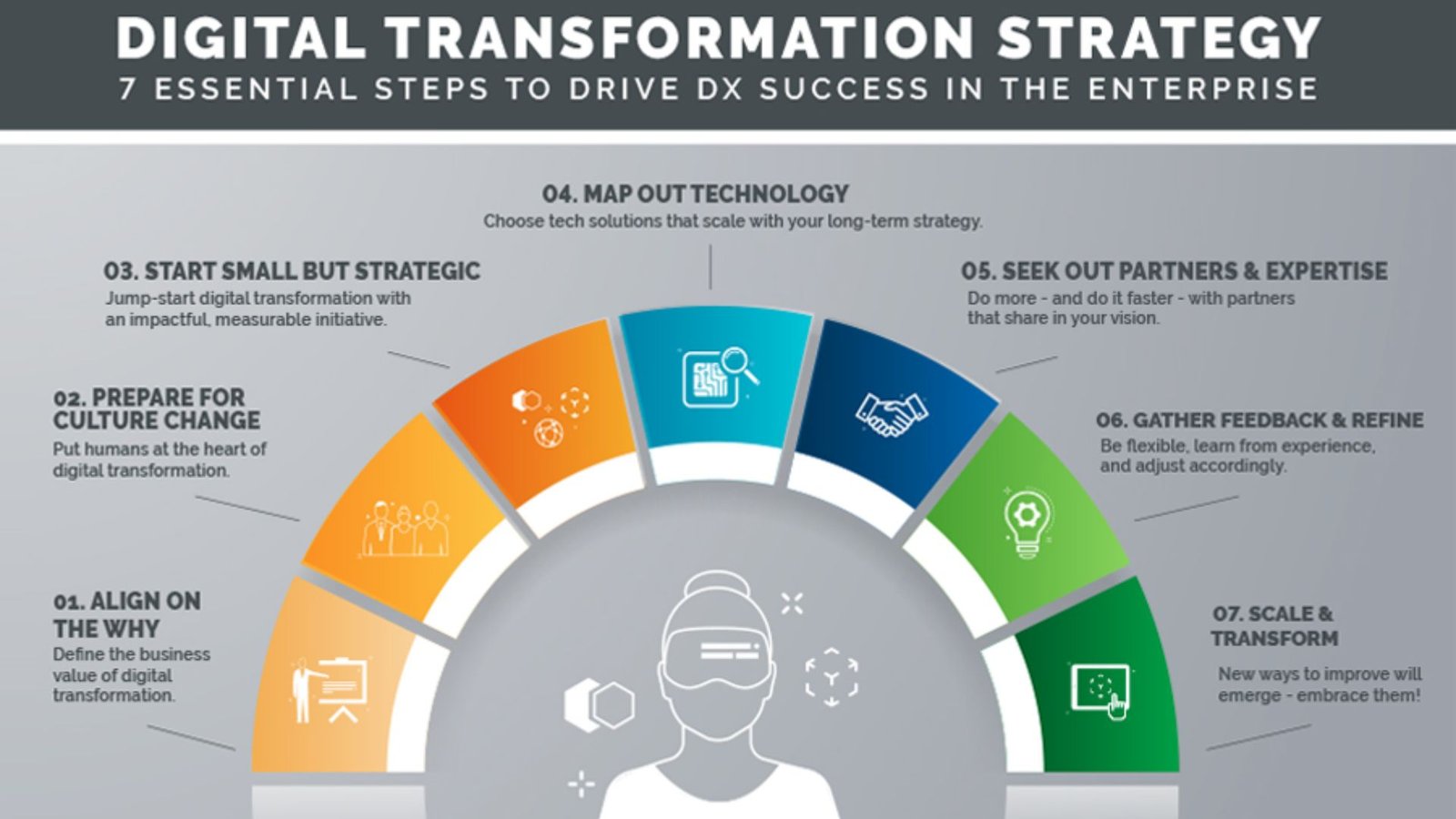
Digital transformation strategies help organizations redesign how they operate, deliver value, and compete by using digital technologies, data, and innovative business models. Companies across industries are moving beyond simply adopting software tools and focusing on deeper changes in processes, culture, customer engagement, and decision-making.
Successful transformation requires more than purchasing new technology. It involves understanding business goals, identifying operational challenges, improving employee capabilities, and creating systems that can adapt to changing market conditions. Businesses that approach transformation strategically are better positioned to improve efficiency, respond to customer expectations, and create sustainable growth.
What Are Digital Transformation Strategies?
Digital transformation strategies are structured plans that guide businesses in using digital technologies to improve performance and create new opportunities. These strategies connect technology investments with business objectives rather than treating digital tools as isolated solutions.
A transformation plan may include cloud computing, artificial intelligence, automation, data analytics, cybersecurity improvements, customer experience platforms, and digital workplace solutions. The goal is not technology adoption alone but creating a more flexible, intelligent, and customer-focused organization.
Many companies previously viewed digital transformation as an IT project. Modern approaches recognize it as a business-wide initiative involving leadership, employees, operations, marketing, finance, and customer service teams.
Why Businesses Need Digital Transformation Strategies
Customer expectations, market competition, and technological advancements continue to influence how companies operate. Organizations relying on outdated processes often experience slower decision-making, higher operating costs, and difficulty meeting customer demands.
Effective digital transformation strategies allow companies to:
- Improve operational efficiency through automation
- Use data for faster and more accurate decisions
- Enhance customer experiences across digital channels
- Reduce repetitive manual work
- Develop new products and services
- Strengthen collaboration between teams
- Improve business resilience during market changes
The strongest transformations focus on solving real business problems instead of implementing technology simply because it is available.
Key Components of Successful Digital Transformation Strategies
A successful transformation approach usually combines several interconnected areas. Businesses should evaluate each component based on their specific goals, industry requirements, and available resources.
| Component | Purpose | Common Technologies |
|---|---|---|
| Digital Customer Experience | Improve interactions and engagement | CRM platforms, mobile apps, personalization tools |
| Data-Driven Decision Making | Turn information into business insights | Analytics platforms, AI, dashboards |
| Process Automation | Increase efficiency and reduce manual tasks | Robotic process automation, workflow tools |
| Cloud Transformation | Improve flexibility and scalability | Cloud platforms, SaaS solutions |
| Digital Workforce Enablement | Support employees with modern tools | Collaboration software, digital training |
| Cybersecurity Enhancement | Protect systems and information | Identity management, threat monitoring |
These areas work together. For example, collecting customer data is only valuable when businesses have the systems and skills needed to analyze it and use insights effectively.
1. Build a Clear Digital Vision
One of the most important steps is defining what transformation should achieve. Businesses should avoid starting with technology decisions before understanding their strategic objectives.
A clear digital vision answers questions such as:
- Which business challenges need improvement?
- How should customer experiences change?
- Which processes create unnecessary delays?
- What capabilities will the organization need in the future?
Leadership alignment is essential because transformation often requires changes in workflows, investment priorities, and organizational culture.
Companies with a clear vision can select technologies that support measurable outcomes rather than collecting disconnected digital tools.
2. Modernize Business Processes
Many organizations attempt digital transformation while keeping inefficient processes unchanged. Technology cannot fully solve problems created by outdated workflows.
Process modernization involves reviewing existing operations and identifying opportunities for improvement. This may include:
- Automating repetitive administrative tasks
- Removing unnecessary approval steps
- Digitizing paper-based processes
- Connecting separate business systems
- Creating faster communication channels
For example, a company may replace manual reporting processes with automated dashboards that provide real-time performance information.
The purpose is to create smoother operations where technology supports employees instead of creating additional complexity.
3. Use Data as a Strategic Asset
Data has become one of the most valuable resources for organizations. However, collecting large amounts of information does not automatically create value.
Businesses need effective systems for managing, analyzing, and protecting data. Data-driven organizations can better understand customer behavior, predict market trends, optimize operations, and identify new opportunities.
Artificial intelligence and machine learning are increasingly used to analyze complex information and support decision-making. However, successful implementation requires accurate data, responsible governance, and skilled teams.
💡 Pro Tip:
Before investing in advanced analytics or artificial intelligence tools, establish strong data management practices. Poor-quality data can limit the effectiveness of even the most advanced digital solutions.
4. Improve Customer Experience Through Digital Channels
Customers expect convenient, personalized, and consistent interactions with businesses. Digital transformation strategies often prioritize customer experience because it directly influences satisfaction, loyalty, and revenue.
Companies can improve customer engagement through:
- Personalized recommendations
- Mobile-friendly services
- Faster customer support
- Self-service platforms
- Integrated communication channels
A successful customer experience strategy connects different touchpoints so customers receive consistent service whether they interact through websites, applications, social platforms, or physical locations.
5. Develop a Digital Culture Within the Organization
Technology alone cannot transform a business. Employees must understand, accept, and effectively use new systems.
Organizations should invest in:
- Digital skills training
- Change management programs
- Leadership support
- Cross-functional collaboration
- Continuous learning opportunities
Resistance to change is one of the most common barriers during transformation. Employees may worry about new responsibilities or unfamiliar technologies. Transparent communication and proper training help create confidence.
6. Strengthen Cybersecurity and Risk Management
As businesses become more digitally connected, cybersecurity becomes a critical part of transformation planning.
Digital transformation strategies should include security from the beginning rather than treating it as an afterthought.
Important security considerations include:
- Protecting customer information
- Managing access permissions
- Monitoring cyber threats
- Updating security policies
- Training employees about digital risks
A strong security foundation allows organizations to innovate while maintaining trust with customers and partners.
Common Mistakes Businesses Make During Digital Transformation
Many transformation projects fail because organizations focus heavily on technology while ignoring strategy and people.
Common mistakes include:
Starting Without Clear Objectives
Businesses sometimes adopt new platforms without defining the problems they want to solve. This can result in expensive systems that provide limited value.
Ignoring Employee Adoption
Even the best technology will fail if employees do not understand how to use it effectively.
Attempting Too Many Changes at Once
Large-scale transformation can become overwhelming. Successful companies often begin with high-impact areas and gradually expand.
Neglecting Security
Rapid digital adoption without proper protection can expose organizations to unnecessary risks.
How to Create an Effective Transformation Roadmap
A practical roadmap helps businesses organize their transformation efforts. A typical approach includes:
- Assess current digital capabilities and challenges.
- Define measurable business objectives.
- Identify priority areas for improvement.
- Select suitable technologies.
- Train employees and manage organizational change.
- Measure results and continuously improve.
The roadmap should remain flexible because technology and business conditions continue to evolve.
📌 Key Takeaway:
Digital transformation succeeds when technology, people, processes, and business goals work together. Companies should focus on creating meaningful improvements rather than simply adopting the latest digital trends.
Frequently Asked Questions
What are the main goals of digital transformation?
The main goals include improving efficiency, enhancing customer experiences, increasing innovation, reducing operational challenges, and helping organizations make better decisions through digital capabilities.
How long does digital transformation take?
The timeline depends on business size, industry, existing technology infrastructure, and transformation goals. Some improvements may happen within months, while larger organizational changes can require several years.
Are digital transformation strategies only for large companies?
No. Small and medium-sized businesses can also benefit from transformation by adopting affordable cloud services, automation tools, digital marketing platforms, and data-driven solutions.
What technologies support digital transformation?
Common technologies include cloud computing, artificial intelligence, machine learning, automation, analytics platforms, cybersecurity solutions, Internet of Things systems, and digital collaboration tools.
Why do digital transformation projects fail?
Projects often fail because of unclear objectives, poor leadership support, insufficient employee training, weak data management, or focusing on technology instead of business outcomes.
Conclusion
Digital transformation strategies provide businesses with a structured approach to improving operations, customer relationships, and future competitiveness. The most effective transformations are not defined by technology alone but by how successfully organizations combine digital tools with strong leadership, skilled employees, and clear business objectives.
Companies that treat transformation as an ongoing process rather than a one-time project can adapt more effectively to changing customer expectations and market conditions. A thoughtful approach helps organizations create lasting value while building the capabilities needed for future growth.
