
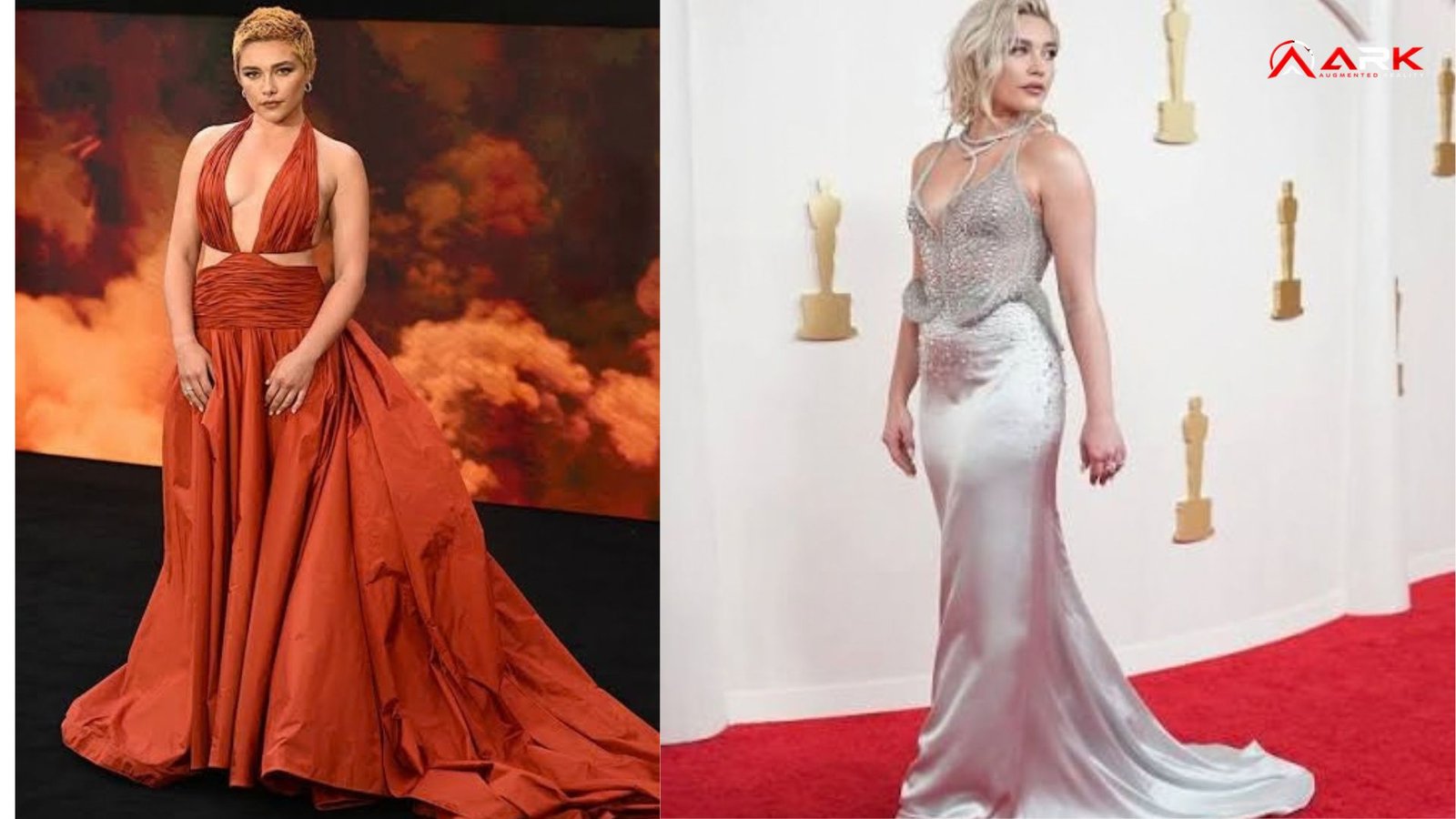
Florence Pugh Oppenheimer searches usually lead to one central question: who does Florence Pugh play in Christopher Nolan’s 2023 film? She portrays Jean Tatlock, a psychiatrist and one of J. Robert Oppenheimer’s most significant romantic relationships. The character is not simply a love interest; Tatlock connects Oppenheimer’s private life with the political and emotional tensions surrounding him.
Oppenheimer stars Cillian Murphy as the theoretical physicist and follows his career from his academic years through the Manhattan Project and the later security-clearance controversy. Florence Pugh appears in the earlier and middle portions of the story, portraying Tatlock during her complicated relationship with Oppenheimer.
Florence Pugh Oppenheimer Role: Jean Tatlock Explained
Jean Tatlock was a real person, not a fictional character created solely for the film. Historical documents show that Oppenheimer met Tatlock in 1936 and became close to her. In a 1954 statement, Oppenheimer wrote that they had been close enough to marriage on more than one occasion. He also discussed her political associations and emphasized that his own political connections could not simply be attributed to Tatlock.
That historical background matters because Nolan uses Tatlock to reveal aspects of Oppenheimer that are difficult to show through scientific or political scenes alone. Their relationship is passionate, intellectual and unstable. Tatlock challenges him in conversation, questions his ideas and becomes part of the personal history that later resurfaces during scrutiny of his associations.
Pugh’s performance gives the character a direct, sometimes confrontational quality. Rather than presenting Tatlock as passive, the film gives her strong opinions and a distinct intellectual identity.
The real Jean Tatlock
Tatlock was a psychiatrist and the daughter of English professor John Tatlock. Historical records also document her connections with Communist Party circles, an aspect that became relevant when Oppenheimer’s associations were examined years later.
The film condenses complicated history for dramatic purposes, so viewers should distinguish between Nolan’s interpretation and the surviving historical record.
Why Jean Tatlock Matters to Oppenheimer’s Story
The Florence Pugh Oppenheimer storyline is important because Tatlock helps establish the scientist as more than the public figure associated with the atomic bomb.
Their relationship introduces several themes that become increasingly important: intimacy, political suspicion, guilt, personal uncertainty and the consequences of past relationships. Tatlock also gives audiences a different perspective on Oppenheimer’s personality before his wartime leadership transforms his public identity.
The connection becomes especially significant because Oppenheimer’s relationships and political associations were examined during the 1954 proceedings that ultimately resulted in the loss of his security clearance. Historical documents from the period specifically mention Tatlock when discussing Oppenheimer’s earlier associations.
| Element | Film portrayal | Historical context |
|---|---|---|
| Florence Pugh’s character | Jean Tatlock | Real person and psychiatrist |
| Relationship | Romantic relationship with Oppenheimer | Oppenheimer documented their closeness |
| Political context | Connected to the film’s discussion of Oppenheimer’s past | Tatlock had Communist Party associations |
| Timeline | Mainly Oppenheimer’s earlier years | They met in 1936 and Tatlock died in 1944 |
| Actor | Florence Pugh | — |
Florence Pugh Oppenheimer Scenes and the Bhagavad Gita
One of the film’s most discussed moments involving Florence Pugh is the intimate scene in which Oppenheimer recites words associated with the Bhagavad Gita. The scene links sexuality, spirituality and Oppenheimer’s intellectual interests in an intentionally uncomfortable way.
The use of the Sanskrit text is not entirely invented for the movie. Oppenheimer studied Sanskrit and later became associated with the famous quotation from the Bhagavad Gita after the Trinity test. The film places that material within his relationship with Tatlock, creating a scene that has been widely debated since the movie’s release.
The sequence also illustrates Nolan’s approach to biography: instead of separating Oppenheimer’s scientific interests from his personal life, the film frequently puts them in the same dramatic space.
💡 Pro Tip: If you are watching Oppenheimer for the first time, pay attention to Tatlock’s conversations rather than treating her scenes as romantic interruptions. They provide useful clues about Oppenheimer’s worldview, relationships and political environment before the Manhattan Project becomes the center of his life.
How Much Screen Time Does Florence Pugh Have?
Florence Pugh has a supporting role rather than a leading one. Oppenheimer is primarily structured around Cillian Murphy’s portrayal of J. Robert Oppenheimer, with the enormous ensemble cast appearing at different stages of his life.
That limited screen presence can make Tatlock feel less developed than some viewers might expect. Critics have also debated the film’s treatment of its female characters, including Tatlock and Kitty Oppenheimer, played by Emily Blunt. The Guardian specifically argued that Pugh’s Tatlock receives relatively limited treatment despite her importance to Oppenheimer’s personal history.
This is one reason Florence Pugh’s performance can generate interest even though the role is comparatively small. Her scenes carry substantial narrative information, particularly about Oppenheimer before and during the early stages of his transformation into a public figure.
Florence Pugh and Cillian Murphy’s Dynamic
The chemistry between Pugh and Murphy is central to making their relationship believable. Their scenes move between intellectual discussion, attraction and emotional tension.
Cillian Murphy has also discussed the importance of the film’s relationships, describing the love-story aspect as unusually strong for Nolan and noting the chemistry he experienced with his co-stars.
For Pugh, the role required her to make Tatlock feel like an independent person while also showing why Oppenheimer remained emotionally connected to her. That balance is particularly important because the historical relationship eventually becomes relevant to the political examination of Oppenheimer.
📌 Key Takeaway: Florence Pugh Oppenheimer is best understood through the character of Jean Tatlock. She represents a documented relationship from Oppenheimer’s life while also helping the film explore his intellectual, emotional and political history.
Frequently Asked Questions
Who does Florence Pugh play in Oppenheimer?
Florence Pugh plays Jean Tatlock, a psychiatrist who had a romantic relationship with J. Robert Oppenheimer. Tatlock was a real person, and surviving documents confirm that she and Oppenheimer became close after meeting in 1936. Her political associations later became part of the scrutiny surrounding Oppenheimer.
Is Jean Tatlock a real person?
Yes. Jean Tatlock was a real psychiatrist and a significant figure in Oppenheimer’s personal life. Oppenheimer himself described their relationship in a 1954 statement, saying they had been close enough to marriage on more than one occasion. Tatlock died in 1944.
Was Florence Pugh nominated for an Oscar for Oppenheimer?
Florence Pugh was part of the ensemble cast of Oppenheimer, but she was not nominated for an Academy Award for her performance as Jean Tatlock. The film itself received multiple major awards and nominations, with Cillian Murphy and Robert Downey Jr. among its prominently recognized performers.
Does Florence Pugh have a major role in Oppenheimer?
Her role is supporting rather than central to the entire film. Tatlock appears mainly in the portions covering Oppenheimer’s earlier personal life. Although Pugh has limited screen time compared with Murphy, her character contributes important emotional and historical context.
Is the relationship between Oppenheimer and Tatlock historically accurate?
The relationship itself is historically documented. Oppenheimer’s own 1954 account describes their closeness and engagement-like periods. However, specific conversations, scenes and dramatic details in Nolan’s film are part of the screenplay’s interpretation and should not automatically be treated as literal historical records.
Conclusion
Florence Pugh Oppenheimer remains a frequently searched topic because Jean Tatlock occupies a fascinating position between Oppenheimer’s private and public lives. Pugh brings intensity and independence to a character whose real-life relationship with Oppenheimer is documented in historical records.
Her role may be supporting, but Tatlock helps establish the complicated personal history that follows Oppenheimer into the political scrutiny of later years. Understanding that context makes Pugh’s scenes more meaningful and adds another layer to Nolan’s portrait of the scientist.
