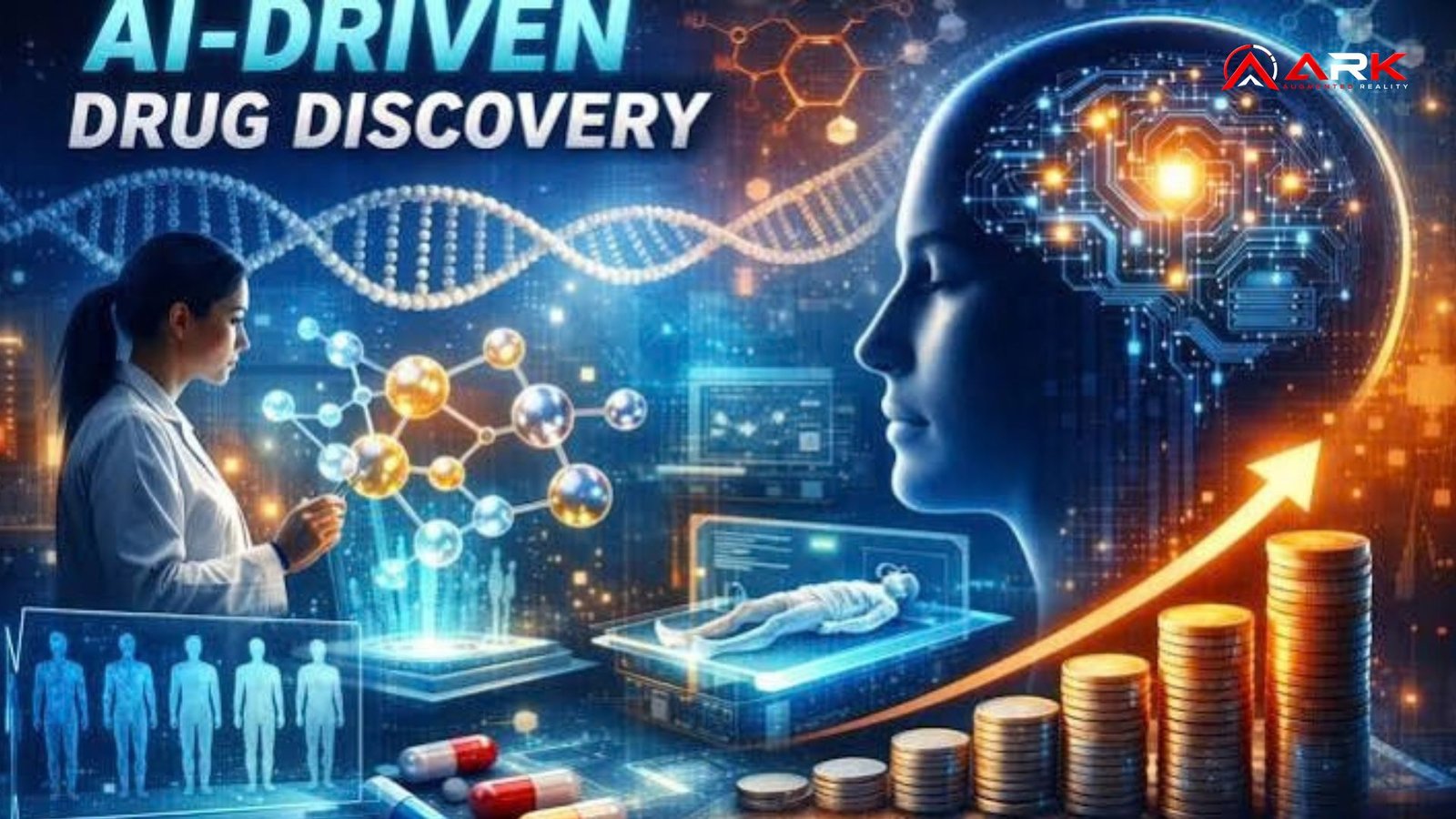
For readers following ai drug discovery news today, September 2026 is bringing a clear shift from experimental AI projects toward larger partnerships, automated research systems, regulatory frameworks, and real-world drug development. Pharmaceutical companies are increasingly using artificial intelligence to analyze biological data, identify drug candidates, optimize molecules, and support clinical development. However, the technology is still being validated, and AI-generated predictions do not remove the need for laboratory experiments and human clinical evidence.
The latest developments in the United States and United Kingdom show where the field is heading—and where major uncertainties remain.
The biggest AI drug discovery developments this week
One of the most significant recent announcements came from AbbVie and Iambic Therapeutics. On September 21, the companies announced a multi-year collaboration using Iambic’s AI platform for small-molecule drug discovery across immunology, neuroscience, and oncology. The agreement combines Iambic’s computational platform with AbbVie’s therapeutic-area expertise and includes milestone payments and royalties.
Iambic is also attracting attention from investors. Reuters reported that the San Diego-based company filed for a U.S. initial public offering, with its lead oncology candidate IAM1363 already in early-stage clinical trials. The company has raised hundreds of millions of dollars and has partnerships with several pharmaceutical companies.
Another major development involves Novo Nordisk and Anthropic. Novo announced a partnership using Anthropic’s Claude Science platform to support drug research and development. The initiative is part of Novo’s broader effort to expand AI across its operations, although the companies have not disclosed specific drug targets from the new collaboration.
Why AI is becoming central to pharmaceutical R&D
AI drug discovery news today is increasingly focused on the practical use of models rather than simple demonstrations of machine-learning capability.
Drug research involves enormous quantities of scientific literature, molecular structures, genomic information, laboratory measurements, clinical data, and biological observations. AI can help researchers search and connect these datasets more rapidly than conventional workflows.
Potential applications include:
- Identifying biological targets linked to disease
- Predicting molecular properties and interactions
- Generating or optimizing candidate compounds
- Prioritizing experiments
- Analyzing clinical-trial information
- Supporting patient selection and trial design
- Repurposing existing medicines for new indications
Novartis, for example, says its R&D teams are using digital technologies and AI to process information faster and answer research questions earlier, including which biological targets appear promising and which molecules may have fewer unwanted effects.
The important distinction is that AI generally helps researchers make and prioritize decisions; it does not independently establish that a medicine is safe or effective in humans.
| Development | Recent example | What it means |
|---|---|---|
| AI-powered discovery | AbbVie–Iambic partnership | More pharmaceutical companies are integrating AI into small-molecule research |
| AI research assistants | Novo–Anthropic collaboration | Foundation models are moving into scientific workflows |
| Autonomous research | Stanford virtual biotech | Multi-agent systems are being tested across parts of drug development |
| Regulation | FDA and MHRA initiatives | Regulators are developing frameworks for responsible AI use |
| Computing infrastructure | Bristol Myers Squibb–NVIDIA | Large-scale AI research requires substantial computational capacity |
AI agents are pushing drug research beyond prediction
One of the most unusual developments in recent ai drug discovery news today comes from Stanford researchers, who reported the creation of a virtual biotechnology company staffed by tens of thousands of AI agents.
According to Stanford Medicine, the system analyzed approximately 50,000 clinical trials in less than a week and searched for biological characteristics associated with successful drug development. The researchers also used the agents to design an antibody-drug conjugate strategy targeting B7-H3 in cancer. A pharmaceutical company later independently developed a similar strategy, providing what the researchers described as external validation of the approach.
This does not mean AI has replaced pharmaceutical scientists. Instead, the experiment illustrates a potentially important direction: dividing complex research into specialized tasks handled by multiple AI systems while humans supervise the overall scientific process.
💡 Pro Tip: When evaluating an AI drug-discovery announcement, look beyond claims about the model itself. Check whether the resulting molecule has entered laboratory testing, animal studies, or human trials. Evidence becomes progressively stronger as a prediction moves through independent experimental and clinical validation.
The major limitation: AI predictions still meet human biology
The latest ai drug discovery news today also contains an important reality check. AI can generate promising molecular hypotheses, but biological systems are extraordinarily complex.
Axios reported in September that AI has not yet produced a broad transformation in drug development despite major investment. Problems include inconsistent biological datasets and the difficulty of translating computational predictions into reliable results in human biology.
A recent Nature Reviews Drug Discovery perspective similarly describes AI as an important developing technology while emphasizing the need for appropriate evaluation, data quality, and understanding of where models can and cannot be trusted.
This explains why the most meaningful announcements increasingly involve AI combined with automated laboratories, pharmaceutical expertise, high-quality datasets, and experimental validation.
FDA and UK regulators are building the rules
Regulation is becoming another major part of ai drug discovery news today.
In the United States, the FDA says AI is increasingly appearing across the drug-product lifecycle, including nonclinical research, clinical development, manufacturing, and postmarketing activities. The agency and European Medicines Agency have also developed 10 guiding principles covering areas such as human-centered design, data governance, model performance, risk assessment, and lifecycle management.
The FDA has separately proposed a risk-based framework for assessing the credibility of AI models used to support regulatory decisions about drug safety, effectiveness, or quality.
In the UK, the Medicines and Healthcare products Regulatory Agency launched an AI sandbox initiative in June 2026. The program is intended to explore how AI can improve medicines safety, risk prediction, and development while also examining alternatives to animal testing.
These initiatives matter because pharmaceutical AI cannot be evaluated solely by technical benchmarks. Regulators need evidence that a particular model works reliably for its intended purpose.
What to watch next
The next phase of ai drug discovery news today is likely to center on evidence rather than announcements alone.
Key signals include whether AI-designed molecules progress through clinical phases, whether pharmaceutical companies expand partnerships after initial projects, and whether automated laboratories can reproduce computational predictions efficiently.
The industry is also moving toward multimodal systems that combine scientific literature, molecular structures, imaging, genomic information, laboratory results, and clinical data. The challenge will be connecting these data sources without introducing hidden errors or misleading correlations.
📌 Key Takeaway: AI is becoming a practical layer of pharmaceutical R&D, but the strongest evidence still comes from reproducible experiments and clinical results. Partnerships such as AbbVie–Iambic and Novo–Anthropic show growing commercial commitment, while regulatory initiatives in the U.S. and UK indicate that responsible validation is becoming part of the technology’s next stage.
Frequently Asked Questions
What is AI drug discovery?
AI drug discovery uses machine learning, generative AI, computational biology, and related technologies to help researchers identify targets, design molecules, predict properties, analyze biological data, and prioritize experiments. It can accelerate parts of pharmaceutical research, but candidate medicines still require laboratory and clinical validation.
Has AI discovered an approved drug?
AI has contributed to drug-discovery and development programs, but identifying whether an approved medicine was discovered specifically by AI is difficult because regulatory databases do not generally classify approvals according to the technology used during discovery. A promising computational result is not equivalent to regulatory approval.
Which pharmaceutical companies are using AI?
Major pharmaceutical companies including AbbVie, Novo Nordisk, Novartis, Bristol Myers Squibb, and others are using AI in different parts of research and development. Their approaches vary from partnerships with AI companies to internal computing infrastructure and software platforms.
Why is AI useful for drug development?
AI can process large and complex datasets, identify patterns, prioritize candidate molecules, and automate some research tasks. Its value is particularly relevant where researchers face huge numbers of possible biological targets or chemical structures that would be difficult to evaluate manually.
What is the biggest challenge for AI drug discovery?
The central challenge is translating computational predictions into reliable biological outcomes. Data quality, model validation, biological complexity, reproducibility, safety, and regulatory requirements can all limit how quickly an AI-generated hypothesis becomes a usable medicine.
Conclusion
The latest ai drug discovery news today points to a maturing industry rather than a finished technological revolution. Pharmaceutical companies are committing more resources to AI, while research groups are testing autonomous scientific agents and regulators are developing clearer expectations for model credibility.
The decisive measure will be what happens after the algorithm produces its prediction: rigorous experiments, clinical evidence, and regulatory review. For patients and investors alike, that distinction will remain essential as AI becomes more deeply embedded in pharmaceutical research.
