
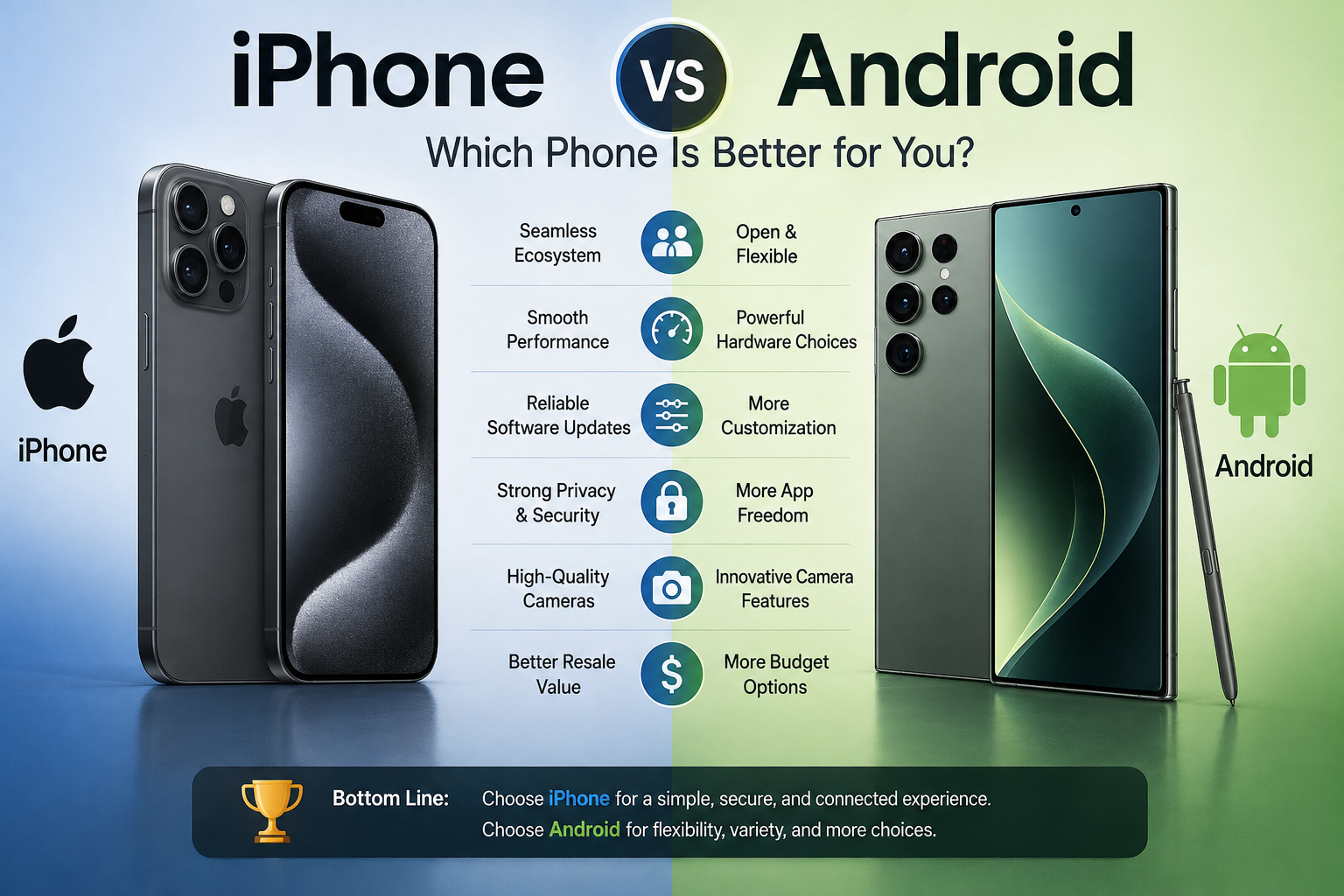
Iphone vs Android is less about choosing a universally better phone and more about deciding which experience fits your priorities. Apple’s iPhone focuses on a tightly controlled operating system, long-term integration with other Apple products, and a consistent user experience. Android offers phones from many manufacturers, broader hardware choices, and greater freedom to customize the device.
In 2026, both platforms have matured considerably. Apple’s current software direction includes iOS 27 features such as expanded Apple Intelligence capabilities, while Android 17 continues to add improvements around privacy, security, performance, and adaptive experiences.
Iphone vs Android: The Main Differences
The biggest distinction is choice. Apple designs the iPhone and controls iOS, while Android is used by manufacturers such as Samsung, Google, OnePlus, Motorola, and others. That creates a much wider range of Android phones, from inexpensive models to premium foldables.
| Category | iPhone | Android |
|---|---|---|
| Hardware choice | Limited to Apple’s lineup | Extensive range of brands and prices |
| Software | iOS | Android with manufacturer-specific interfaces |
| Customization | More controlled | Generally more flexible |
| Ecosystem | Strong integration with Apple devices | Broad compatibility across brands and services |
| App distribution | More controlled | More flexibility, depending on device and region |
| Premium options | Strong flagship lineup | Many flagship choices |
| Budget options | Limited | Extensive |
| File management | More controlled | Generally more flexible |
That difference affects almost every buying decision. Someone who wants simplicity may prefer Apple’s approach, while a buyer who wants maximum flexibility may find Android more appealing.
Design, Hardware and Price
Apple keeps its smartphone range relatively focused. The advantage is consistency: buyers can compare a small number of iPhone models rather than sorting through dozens of manufacturers.
Android is almost the opposite. You can find compact phones, gaming-focused devices, large-screen models, foldables, camera-oriented flagships, and affordable handsets. Google’s Android platform is designed to support many form factors, including phones, tablets, foldables, Wear OS devices, TVs, and ChromeOS hardware.
Price is another major difference. Android gives shoppers substantially more options at the lower end of the market. If your budget is limited, you can often find an Android phone with a large display, high-refresh-rate screen, or generous storage without moving into flagship pricing.
The iPhone lineup tends to concentrate more heavily on the mid-range and premium segments. Older iPhone models can provide a lower-cost entry point, but Apple’s current range does not cover the same breadth of inexpensive hardware available across Android.
Camera Quality iPhone vs Android
Both platforms can produce excellent photos, but camera performance should be judged by the specific model rather than the operating system alone.
iPhones are particularly strong for users who value predictable results across photography and video. Apple’s tight control over hardware and software allows it to tune image processing around specific camera systems.
Android’s advantage is variety. Manufacturers experiment with periscope telephoto lenses, high-resolution sensors, specialized portrait modes, advanced zoom systems, and computational photography. A premium Android phone may therefore offer capabilities that differ significantly from an iPhone at a similar price.
For social media, casual photography, and everyday video, either platform can be excellent. Buyers who care about cameras should compare the exact phones rather than assuming one operating system always wins.
Software and Customization
The software experience is one of the clearest areas of difference in Iphone vs Android discussions.
iOS is deliberately controlled. Apple decides how many system-level changes users can make, which helps keep the interface relatively consistent. The company also controls both the operating system and iPhone hardware.
Android generally gives users more room to personalize the experience. Depending on the manufacturer, you can change launchers, widgets, default applications, interface elements, and other parts of the system. Android’s development ecosystem is also designed around a wide variety of devices and configurations.
That freedom can be useful for experienced users, but it can also make different Android phones feel quite different from one another.
Apps, Messaging and Ecosystem
Both platforms have access to the major apps most people use for communication, entertainment, banking, productivity, shopping, and social media.
The ecosystem can be more important than the phone itself. If you already use a Mac, iPad, Apple Watch, or AirPods, an iPhone can make the overall setup feel more connected. Apple continues to emphasize continuity between iPhone and other Apple products in its software experience.
Android has its own strong ecosystem, particularly for people who use Google services or hardware from manufacturers such as Samsung and Google. Android also supports a broader collection of devices and form factors, giving users more flexibility when building a mixed-device setup.
💡 Pro Tip: Before choosing a phone, list the three devices you use most often besides your smartphone. If they already belong to one ecosystem, staying within that ecosystem may save you more frustration than choosing a phone based solely on camera specifications or processor speed.
Security and Software Updates
Security is important on both platforms, but the update experience can vary.
Apple controls iOS updates for its own hardware, creating a relatively centralized software environment. Android updates can depend on the phone manufacturer and model, although support policies have improved considerably across the industry.
Android 17, for example, includes platform-level work focused on privacy, security, performance, media, and camera capabilities.
The practical lesson is simple: don’t judge update support only by the Android or iOS label. Check the manufacturer’s stated support period for the exact model you intend to purchase.
Which Is Better for Gaming iPhone vs Android?
Gaming performance depends heavily on the individual processor, graphics hardware, cooling system, display, and game optimization.
High-end iPhones can deliver strong gaming performance, while Android offers an unusually broad selection of gaming-focused hardware. Some Android manufacturers build phones specifically around sustained performance, fast displays, large cooling systems, and gaming controls.
The better choice depends on the games you play and the particular phone. A premium handset from either side can be dramatically faster than an inexpensive device from the same platform.
Which Should You Buy?
The best answer in the Iphone vs Android debate depends on what you value most.
Choose an iPhone if you want:
- A controlled and consistent interface
- Strong integration with Apple products
- Straightforward software updates
- A focused range of hardware choices
- A premium smartphone experience
Choose Android if you want:
- More brands and price points
- Greater customization
- More hardware variety
- Foldable and specialized form factors
- More flexibility over how the phone works
Neither platform is automatically right for everyone. A student with a tight budget may prioritize Android’s selection, while someone deeply invested in Apple’s ecosystem may value iPhone integration more than additional customization.
📌 Key Takeaway
Iphone vs Android is really a choice between two different approaches to smartphones. iPhone emphasizes control, consistency, and ecosystem integration. Android emphasizes variety, customization, and hardware choice. Compare your budget, existing devices, preferred apps, camera needs, and update expectations before deciding.
Frequently Asked Questions
Is iPhone better than Android?
There is no universal winner. iPhone can be the better option for people who value Apple’s ecosystem, a consistent interface, and centralized software updates. Android may be preferable for shoppers who want more hardware choices, lower prices, customization, or specialized features. The best choice depends on the specific phone and the buyer’s priorities.
Which is more customizable, iPhone or Android?
Android generally provides more customization. Users can often change launchers, widgets, default applications, and other interface elements depending on the device. iOS offers customization too, but Apple keeps tighter control over the overall experience. That difference makes Android particularly attractive to users who enjoy changing how their phone looks and behaves.
Which has better cameras?
Neither platform consistently wins across every model. iPhones are known for consistent photography and video performance, while premium Android phones offer a wide variety of camera systems and specialized hardware. Compare the exact models you are considering, especially if zoom, low-light photography, portraits, or video recording are important to you.
Is Android cheaper than iPhone?
Android offers more budget choices because many manufacturers produce phones at different price levels. Apple’s lineup is more concentrated toward the mid-range and premium market. However, an older iPhone can sometimes compete with newer Android phones at similar prices, so comparing actual specifications and software support is more useful than looking at brand alone.
Which phone lasts longer?
Physical lifespan depends on battery health, build quality, repairs, usage, and software support. Both modern iPhones and premium Android phones can remain useful for years. The exact manufacturer’s update policy is important, particularly for Android, where support can differ substantially between manufacturers and models.
The strongest choice becomes clearer once you stop treating Iphone vs Android as a simple brand rivalry. Look at the phone you are actually considering, the devices you already own, and the features you use every day. For some buyers, Apple’s controlled ecosystem will be the deciding factor. For others, Android’s range of hardware and customization will make more sense. The right phone is the one that fits those priorities rather than the one with the louder reputation.
